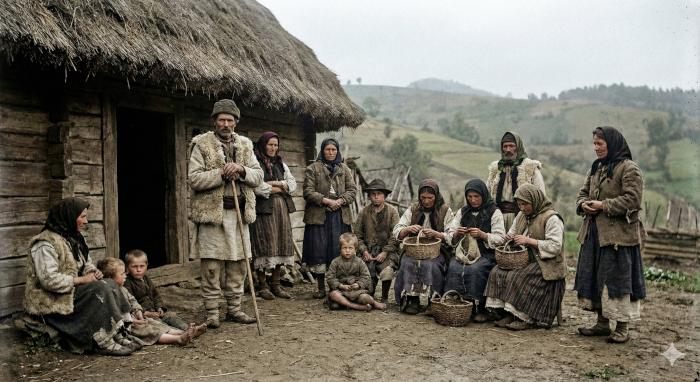
Liteni, a village in Moara Commune, Suceava County in modern Romania has existed for 600 years. If you are related to our Cojocari family the village is a very important place to know.
More than one Liteni
Before you start searching maps on-line for the village of Liteni you need to know that there are four villages and towns in modern Romania with the name ‘Liteni’. They are as follows:
- (Our) Liteni, a village in Moara Commune, Suceava County, Romania
- historically Bukovina
- formerly named Litencut (Romanian: Litincuți)
- Liteni, a town in Suceava County, Romania
- Located approximately 26 km to the east of Our Liteni
- historically Western Moldavia
- formerly named Liteny and Litenimare
- Liteni, a village in Săvădisla Commune, Cluj County, Romania
- Located approximately 235 km southwest of Our Liteni
- historically Transylvania
- Liteni, a village in Belcești Commune, Iaşi County, Romania
- Located approximately 50 km southwest of Our Liteni
- historically Western Moldavia
Our Liteni
The village of Liteni which figures prominantly in the heritage of our Cojocari family is the village named Liteni in Moara Commune, Suceava County, Romania. In this page you will see us refer to is as ‘Our’ Liteni or village etc..
| Map Coordinates: 47°34′15″N 26°10′54″E | Altitude: 303 m / 994 ft1 |
| Historic Population: 1900 Census: 8352 1930 Census: 9023 2021 Census: 7354 | Moara Commune Homepage Moara Commune Wikipedia Page |
| Villages in the Moara Commune with Our Liteni: Bulai, Frumoasa, Groapa Vlădichii, Liteni, Moara Carp, Moara Nica, Vornicenii Mari, Vornicenii Mici |
History of Our Liteni
Mongol Empire
1240’s
The good people of our village of Liteni (if it existed then) would have been aware of the invasion of nearby regions by the Mongol empire. The path that the Mongols travelled during their initial invasion into the region may have lead them in a line between what is now Kiev in the Ukraine through to what is today the Romanian city of Bistrița. That path would have lead them near to the modern city of Suceava which is only 12 km northeast of our village means that our village would have been, at worst, affected or at best, aware.5
.png#/media/File:Map_of_the_Golden_Horde_(with_text).png)
By naturalearthdata.com, offered to the Public Domain per Terms of Use – This image has been extracted from another file, CC0, Link
The portion of the Mongol Empire that our Liteni Romanians were nearest to was known as ‘The Golden Horde‘. The maps of The Golden Horde over time seem to show that to the east of Our Liteni the border stopped at the Prut River which is approximately 50 km directly to the east where the border between today’s Romania and the modern country of Moldova is found. The Golden Horde also held the land in the south of what is now modern Romania along the Black Sea. It is safe to say that the Romanians in the region around Our Liteni were very aware of Mongol rule over their fellow cultural Romanians to the east and south.6
Looking at maps of the ‘The Golden Horde‘ it seems that while the Mongol armies passed through the area of our village, they did not end up ruling the region for whatever reason.
The rule of The Golden Horde would last ~100 years in this region until it’s border was pushed further east after a battle against Hungarian forces in 1343.
1343
We don’t know how the rule of the ‘The Golden Horde‘ over the previous ~100 years may have affected the people in the region of our village of Liteni they very much would have been aware when Voivode Dragoș of Maramureș (who would go on to be credited with founding the Principality of Moldavia and becoming it’s ruler, Dragoș the 1st, in three more years (1346)), sent by one of the kings of Hungary Louis I of Hungary (Editor: Might have the wrong King. Sigismund of Luxembourg a possibility?), defeated the Mongols of the Golden Horde and drove them around 150 km further east across the Dniester river (which was about 200 km to the east of Our village of Liteni).7

By the year 1343 more than 100 years of Moglol rule had passed, all witnesses to the invasion with actual memories of what life had been like prior to it were gone. To both the people in the area of Our Liteni who knew the Mogol Empire only as ‘neighbours’ and the people who were actually under Mogol rule, the Empire had always existed and they knew of nothing different. Therefore the attack by the King of Hungary brought stress and change. Perhaps it was a welcome change with Kings and politicians promising improvements somehow but change is always hard.
1346-1353
Our village of Litincuți (if it existed) probably experienced ‘The Plague‘ (aka Black Death) which travelled the world and claimed somewhere between 30% and 60% of the population. Millions perished. Whether the area of Our Litincuți experienced The Plague or not the greater affect of the death and fear across a huge swath of the world would have left a traumatic mark in the minds of the any left living after it passed. The science of how diseases are transmitted was terribly basic at the time.8
During the Black Death, people did not know about germs, bacteria, or the true carrier of the disease (fleas on rats). The most widely accepted medical theory was that the plague was caused by “miasma”, corrupted or poisonous air. Many regions tried their best to limit exposure to bad air.
People carried sweet-smelling herbs, flowers, or spices (like ambergris or rose water) to sniff when passing crowds, believing the pleasant scent would block the bad air. Cities attempted to clean streets of waste and rotting carcasses to remove the source of the bad smells. Some towns rang church bells or fired cannons, believing the loud noise would break up the pockets of stiff, poisonous air.
Moldavia
Village of Litincuți, Moldavia
1346
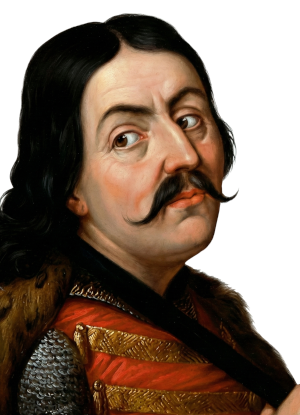
Our village of Litincuți (if it existed) became aware in the year 1346 that they were now part of a new region called Moldavia named and were ruled by Dragoș the 1st (aka Dragoș Vodă, Dragoș of Maramureș, Dragoș the Founder), Voivode of Moldavia he would rule for a period which may have been between nine and fifteen years.9
- Dragoș the 1st had led Hungarian troops in battle against the Mongol Golden Horde at the order of one of the kings of Hungary three years prior in 1343 and pushed them a further 150 km to the east.
During his rule Dragoș was a vassal of the Hungarian King Louis I. His major accomplishments were establishment of a defensive border province east of the Carpathian mountains to protect the Kingdom of Hungary from Tatar (Golden Horde) raids and establishing his capital briefly at Baia and later at Siret.
Dragoș the 1st was an important historical figure even in modern Romania as the founder of Moldavia. Romanians celebrate a legend which tells of how Dragoș crossed the Carpathian Mountains from Hungary while hunting an aurochs (bison). According to the story, his hound, Molda, drowned in a river during the hunt, leading Dragoș to name the river “Moldova”. Dragoș settled in the region and claimed the surrounding lands on behalf of Hungary, naming them “Moldavia“.
1353 (or later) 1361 (or earlier)
Our village of Litincuți (if it existed) heard the news that the founder of their country Moldavia, Dragoș the 1st, had died after ruling for somewhere between nine and fifteen years since 1346. (Editor: History seems unsure)10,11
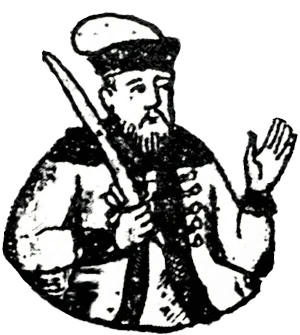
Our village of Litincuți (if it existed) was informed that following the death of Dragoș the 1st his son Sas of Moldavia would assume the leadership of Moldavia. Sas of Moldavia would rule as Voivode for a period of about four to five year years until about 1357 (or later) or maybe 1364 (or earlier).12
Like his father, Sas did not rule an independent country but rather administered Moldavia as a defensive border province on behalf of the Hungarian King. His primary role was to maintain the defensive line east of the Carpathians against the Golden Horde (Tatars), ensuring the security of the Hungarian Kingdom’s eastern frontier. His reign represented the continuity of Hungarian suzerainty, which was becoming increasingly unpopular among the local vlach population like the people of Our Liteni.
1357 (or later) 1364 (or earlier)
Our village of Litincuți (if it existed) received the news that their leader Sas of Moldavia was dead.
Initially it looked like the next person to lead Moldavia would be Balc, a son of Sas but, hold on to your hats, it was not meant to be! A man named Bogdan saw the death of Sas as an opportunity for himself to return to power!
1359 (or later) 1365 (or earlier)
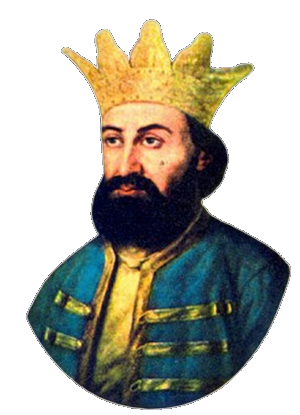
Following the death of Sas of Moldavia the people of our village of Litincuți (if it existed) may have heard tales of intrigue about how Bogdan the 1st (aka Bogdan the Founder) (Romanian: Bogdan Întemeietorul) had become their ruler instead of Balc, son of Sas.
Bogdan was previously the Voivode of Maramureș (the Maramureș region is about 100 km to the west of our village of Litincuți (if it existed)) where he was loyal to the Kingdom of Hungary. In 1342 however his he abandoned any loyalty to Hungary and Bogdan invaded lands of a vlach landowner who was loyal to the Kingdom of Hungary. The Hungarian rulers were angered. In time the Hungarian King stripped Bogdan of his title and lands in retaliation.
Bogdan upon hearing of the death of Sas of Moldavia and possible weakness of Balc, son of Sas, with a small army of supporters descended upon the seat of power, the city of Siret, in Moldavia. Bogdan the 1st defeated those loyal to Balc and seized power as it’s new Voivode. Balc, severely wounded, fled to Hungary and safety.
The leadership of Bogdan the 1st of Moldavia marked the first time that the country stood without loyalty to the Kingdom of Hungary or anyone else.
Through his reign Bogdan the 1st‘s most significant accomplishment was successfully defending this newfound independence against repeated Hungarian military campaigns attempting to reclaim the region. By repelling King Louis I’s forces, Bogdan transformed Moldavia from a military buffer zone into a distinct political entity. Bogdan and his descendants would form the Bogdan-Mușat dynasty which would rule Moldavia for nearly three centuries.
1367
In 1367 our village of Litincuți (if it existed) received word that their leader Bogdan the 1st of Moldavia had died.

Following the death of his grandfather Bogdan the 1st of Moldavia in 1367 his grandson Peter the 1st of Moldavia rose to power (Editor: Historians disagree on the identity of Peter, some even denying he existed at all). The people of our village of Litincuți (if it existed) had now seen four different Voivode rise to power and then pass into history in the last twenty-one years. One wonders whether they had any sense that their leaders were improving the lives of the ordinary peasant … if that was even a goal of those in power. At the very least we can assume that the people in Our Liteni were hopeful that their new leader Peter the 1st would continue leading an independent Moldavia free of Hungarian influence.
Peter the 1st of Moldavia would serve the people of Moldavia as Voivode only for the next year. History doesn’t record any significant accomplishments during his rule.
1368
Our village of Litincuți (if it existed) were likely disappointed to hear in July of 1368 that their Voivode Peter the 1st of Moldavia had been removed from power after serving only about a year in office. Not much is known about Peter and historians are not even sure about his exact identity or whether he even existed at all. …and yet there are some saying that he was removed from power. Certainly there is no information about what became of Peter.
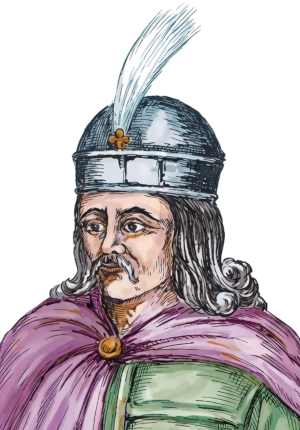
Word arrived to the people of Our Liteni that Lațcu of Moldavia would be their new Voivode. The people were likely not surprised as Lațcu was a son of Bogdan the 1st and thus continued the Bogdan-Mușat dynasty.13
Lațcu’s reign would be best characterized by a bold and pragmatic diplomatic maneuver: an attempt to bypass Hungarian hostility by aligning directly with the Papacy. Facing aggressive pressure from King Louis I of Hungary (who sought to reclaim Moldavia as a vassal state) and the Polish Kingdom to the north, Lațcu initiated negotiations with the Vatican’s Holy See offering his own conversion to Roman Catholicism in exchange for recognition and protection.
Lațcu of Moldavia would rule Moldavia for about seven years until 1374 or 1375.
1369
Lațcu of Moldavia converted to Catholicism and requested that Pope Urban V establish a bishopric in his capital, Siret. This was a shrewd political move intended to secure Moldavia’s status as a sovereign entity recognized by the Western powers, independent of the Hungarian church hierarchy.
The conversion of Lațcu of Moldavia remained a purely personal and political act; the vast majority of the population and even Lațcu’s own family remained staunchly Orthodox. Ultimately, the Catholic experiment did not take root, and Lațcu was buried according to Orthodox rites in the bogdanid necropolis at Rădăuți.
1371
Pope Gregory XI sent representatives to examine the state of affairs of Moldavia in person. Following their favourable report a bishop was appointed to oversee a new Catholic diocese.
In 1371, a Catholic diocese was established as per Lațcu of Moldavia’s plea to the Roman Catholic Church in the capital city Siret, directly subordinate to the church of Rome and not Hungary. At the same time Pope Gregory XI bestowed Lațcu the title of “Duke of the Moldavian parts or of the people of Wallachia”. It is possible that the newly built Catholic church served any Romanian people who converted but more likely for the service of existing Hungarian and Saxon citizen.14
1372
Lațcu of Moldavia in 1372 was able to have some rights for Moldavia recognised by Charles IV the Holy Roman Emperor. This was likely done in an effort to leverage the power of the Holy Roman Empire against the influence of Hungary upon Moldavia. It is unclear if there was any effect. Moldavia was not ruled by the Holy Roman Empire at this point, just loosely associated at this point.
1375
The villagers of Litincuți (if it existed) received notice in 1375 (or 1374) that their Voivode Lațcu of Moldavia was dead.
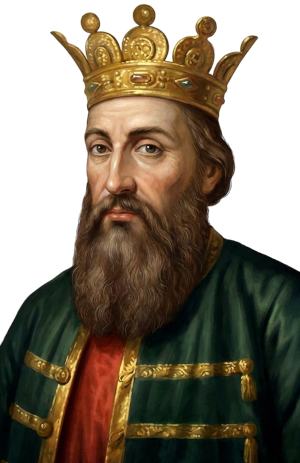
The villagers of Litincuți (if it existed) perhaps celebrated the news that they were now ruled by a new Voivode named Petru the 2nd of Moldavia (aka Petru (Peter) Mușat) who was maternal grandson of Bogdan the 1st and thus a continuation of the Bogdan-Mușat dynasty.
Petru returned the state firmly to religious Orthodoxy rejecting the flirtation with Catholicism begun by his predecessor Lațcu of Moldavia in 1369. Petru the 2nd establishing the first Metropolitanate of Moldavia by appointing a local bishop, Iosif—a move that asserted religious independence from established foreign hierarchies.
His reign is marked by significant economic and infrastructure development. Petru the 2nd minted the first Moldavian currency, the silver groș, which facilitated trade and economic unification. He moved the seat of power from the city of Siret and established his new capital at Suceava, building the Princely Fortress (Cetatea de Scaun) there, as well as the formidable Neamț Citadel.
Diplomaticaly, Petru the 2nd secured Moldavia against Hungarian aggression by swearing vassalage to the Polish King.
Petru the 2nd would reign over Moldavia for the next 16 years until his death in 1391.
1386
Metropolis of Moldavia established
x
x
x
1387
Petru the 2nd of Moldavia agrees on September 27, 1387 to have Moldavia become a Polish fief for the more powerful Polish king Władysław II Jagiełło with each party benefitting. This beneficial relationship would remain in-place for the next 110 years, ending in 1497.
1388
In 1388 Voivode Petru the 2nd of Moldavia established the princely seat of Moldova at the city of Suceava a mere 13 km northeast from our village of Litincuți (if it existed). The villagers of Litincuți would have found it very convenient and safe to be so close to the seat of power. Previously the seat of Moldavia was in Siret.
1391
Our village of Litincuți (if it existed) during December 1391 would have been notified that their Voivode Petru the 2nd of Moldavia had died after about 16 years leading the country.
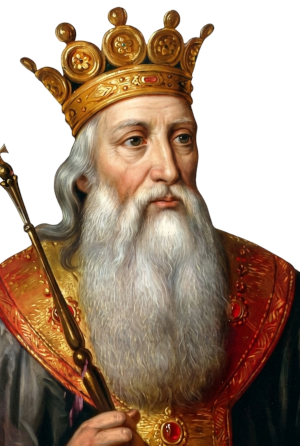
Our village of Litincuți (if it existed) received word later in December 1391 that they had a new ruler for their country Moldavia named Roman the 1st(aka Roman Mușat). He would be their new Voivode. His reign would last only a couple of years ending in December 1394.
1394
Our village of Litincuți (if it existed) during December of 1394 learned of the death of their leader Roman the 1st (aka Roman Mușat), Voivode of Moldavia. Roman the 1st had only ruled for a couple of years but he is credited with Moldavia incorporating all the territories between the Carpathian mountains and the Dniester river thus expanding a region which thought of itself as a home for ethnic Romanians.
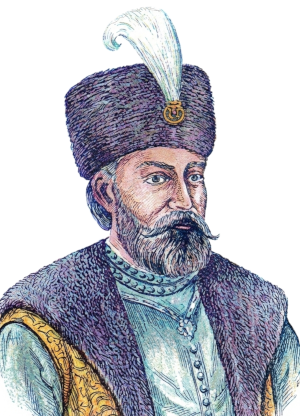
Our village of Litincuți (if it existed) may have celebrated the announcement of the succession of their new leader called Ștefan the 1st of Moldavia during March of 1394 following the death of his brother Roman the 1st three or four months prior.
Ștefan the 1st would rule for about five years until 1399.
1395
February 1395: Men from our village of Litincuți (if it existed) may have been members of the Moldavian Army of their Voivode Ștefan the 1st who successfully defeated the army of king Sigismund I of Hungary at the Battle of Ghindăoani preventing Moldavia from being under Hungarian rule.15
1399
Our village of Litincuți (if it existed) during 1399 was saddened to hear of the illness and death of their leader Ștefan the 1st of Moldavia who had ruled over them for about five years.

Our village of Litincuți (if it existed), following the death of their leader Ștefan the 1st of Moldavia received notice during November of 1399 that their newly appointed leader would be Iuga of Moldavia (aka Iuga the Crippled or Iuga the Lame).16
Iuga was the second born son of Roman the 1st (aka Roman Mușat) and brother of Ștefan the 1st – these facts are disputed by some historians.17
Iuga’s rule would only last about one year until his death on July 19, 1400.
1400
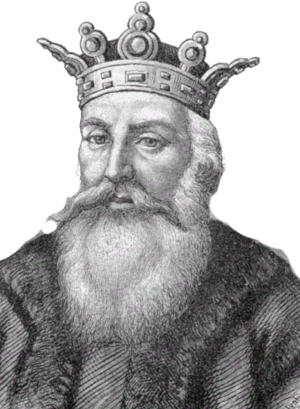
July 1400: Following the death of their leader Iuga of Moldavia the villagers of Litincuți (if it existed) learned that the new rulers of Moldavia were brothers Alexandru the 1st (aka Alexander the Good) (Romanian: Alexandru cel Bun) filled the leadership role as Voivode and his brother Bogdan (aka Bogdan the Boss) (Romanian: Bogdan Jupânul) performed in a lesser but noble capacity. Alexandru the 1st would reign for the next 32 years. His brother Bogdan would disappear from history in about 1407, perhaps deceased.18
1401
Metropolis of Moldavia recognised by Ecumenical Patriarchate of Constantinople as the “Metropolis of Moldo-Wallachia”
x
x
1429
Our village of Litincuți is first attested in documents dated March 11, 1429 under the name Litincuți during the reign of Alexandru the Good (Alexandru cel Bun).19
- The name Litincuți may have been a diminutive of the name “Liteni,” so that it could be distinguished from the larger settlement also named Liteni located ~26km to the east.
Village of Litincuți, Suceava County, Țara de Sus, Moldavia
1446
By 1446 it had been about 100 years since The Plague ran riot through the world including the region around Our village of Litincuți. Before this point in history many people could have had personal knowledge of the Black Death or knew people from previous generations who did. From this point forward it would be forgotten except to scholars.
1436
1436: Our village of Litincuți was informed that they were now part of a newly defined region of Moldavia called “Țara de Sus” (Upper Land). In modern Romania this is roughly the Maramureș area.20
- To their south a region of Moldavia was defined as “Țara de Jos” (Lower land).
1497
In 1497, after being honoured for 110 years the status of Moldavia as a Polish fief, negotiated by Petru the 2nd of Moldavia in 1387, comes to an end. Moldavia could no longer rely on the protection of the Polish King.
Ottoman Empire (1532-1774)
Village of Litincuți, Principality of Moldavia, Ottoman Empire
1532
In 1532 Litencut (Romanian: Litincuți), being part of the country of Moldavia, changed their identity to be a vassal principality of the Ottoman Empire they then became known as the Principality of Moldavia.21
We can assume that the cultural Romanian people of Litincuți were devout Eastern Orthodox christians when Ottoman rule began. The Ottomans, while an Islamic empire, were tolerant of other religions. The practice of Eastern Orthodox christianity in Litincuți would have meant that the Ottomans would have approved local leaders to be of Eastern Orthodox faith and, because of their non-Islamic region, they would have been taxed at a higher rate than people of the Muslim faith. Non-Muslims were considered by the empire to be second-class citizens but they were not punished, merely ‘encouraged’ to adopt the Muslim faith.
Age of Enlightenment (late 1600’s – earliest 1800’s)
While the Age of Enlightenment may not have had a measurable impact on Our Liteni it is fair to say that times were changing in the rest of the world. People not in the traditional ruling-classes yearned for ideas being proposed by the Enlightenment to be experimented with. The implication of the Enlightenment concepts was a dismantling of traditional undemocratic rule and removal of religious influence from government and education.
The central doctrines of the Enlightenment were individual liberty, representative government, the rule of law, and religious freedom, in contrast to an absolute monarchy or single party state and the religious persecution of faiths other than those formally established and often controlled outright by the State. By contrast, other intellectual currents included arguments in favour of anti-Christianity, Deism and Atheism, accompanied by demands for secular states, bans on religious education, suppression of monasteries, the suppression of the Jesuits, and the expulsion of religious orders. During this period there is also the development and formalising of systems of reason, empirical evidence, and the scientific method.22
As you read on keep in your mind that the ideas of the Enlightenment were undeniably spreading across the world over the next one hundred years or so and inspiring (or terrifying) ordinary people and their rulers.
1710-1713
1710-1713: The men of Litincuți may have participated as members of the Moldavian army in the Russo-Ottoman War of 1710–1713. The Tsar’s army attacked the Ottoman-ruled Principality of Moldavia which was harboring enemies of Russia – The Ottomans in-turn declared war against Russia on November 20, 1710. Less than a year later the ruler of the Principality of Moldavia decided to switch sides and signed the Treaty of Lutsk on April 13, 1711 agreeing to support Russia in it’s battle against the Ottoman Empire!
Claims of bribery would fly! The Ottoman Empire was able to reenforce their army and defeat the Russian and Moldavian armies three months later. The war drew to a close upon the drafting and signing of the Treaty of Pruth of July 21, 1711 and further reconfirmed with the signing of the Treaty of Adrianople two years later on June 24, 1713. The Moldavian elite responsible for betraying their allegiance to the Ottoman empire either fled to Russia or were tried and executed by the Ottomans.23,24,25
1749
1749: Before 1775, when Bukovina was the northwestern part of the Principality of Moldavia, the local form of serfdom (where serfs were known regionally as vecini) was already harsh. However, in 1749, Moldavian ruler Constantine Mavrocordatos replaced historical serfdom with a system of defined dues and obligations:26
- Moldavian ruler Constantine Mavrocordatos formally abolished hereditary serfdom (being born to serfs meant the baby would also be a serf)
- Serfs were taxed once per year in the amount of 10 löwenthaler to their lord (Boyer). (Editor: Unsure if this tax was paid to the lord (Boyer) or directly to the State)
- Serfs were given the right to move from the land of one lord (Boyer) to the land of another by paying a fee of 10 löwenthaler to the lord which was being exited.
- There was already a flow of serfs fleeing Moldavia for neighbouring Transylvania so this was a way of Moldavia generating revenue while admitting that they were unable to stop the migration. By allowing the Serfs to pay to leave rather than being required to petition their lord to be released this effectively meant the end of Serfdom.
- Allowing peasants to move without paying for the privilege would not officially end for another 32 years until the Josephinian Reforms in 1781.
- Serfs were required to perform twelve days of mandatory uncompensated labour (Hungarian: robot, French: corvée) for their lord (Boyer) (Editor: Unsure if the 12 days was per month, year…) as a form of taxation
- Each lord (Boyer) was allowed to retain a Retinue of serfs (household servants) for their own personal use for which the lord was not required to pay tax for to the state (although the serfs held for this purpose would still have to pay their taxes to the lord)
- Lords (Boyers) were forbidden from separating married Gypsies belonging to different lords
1768-1774
1768-1774: Men of Litincuți may have participated in the Russo-Turkish War of 1768-1774 as members of the army of Principality of Moldavia fighting for the Ottoman Empire. Tsarist Russia has been working to destablize the Polish-Lithuanian Commonwealth for a while perhaps hoping to open the door to annexing it. Anti-Russian rebellions had begun to spread and Russia worried that the rebellious people of the Polish-Lithuanian Commonwealth would endanger the pro-Russian stance Russia had been encouraging in the region. Russia made the decision to send their troops in and round up the rebels. Some of the rebels fled across the border into the Ottoman Empire to the nearby city of Balta which at the time was in the Principality of Moldavia (today Balta is in Podilsk Raion, Odesa Oblast in south-western Ukraine). The Russian army followed on September 17, 1769 without first seeking the permission of the Ottoman Emprire and as a result the Ottoman Empire declared war on Russia. The fighting was fierce and despite the Ottoman Empire fielding superior numbers of troops the better-trained and armed Russians defeated the Ottoman army on land and sunk the entire fleet of the Ottoman Navy. The Ottoman Empire was defeated and signed the Treaty of Küçük Kaynarca on July 21, 1774 giving major concessions to Tsarist Russia. Historically, this war is thought to mark the beginning of the decline of the Ottoman Empire and the beginning of the Russian rise as a super-power.27
Austrian/Habsburg Period (1775-1918)
Village of Liteny, Military District, Kingdom of Galicia and Lodomeria, Holy Roman Empire
1775
Following the end of the Russo-Turkish War of 1768-1774 the Habsburg Monarchy in 1775 annexed land from what had been the Principality of Moldavia under the Ottoman Empire which they simply named “Military District” (German: Militärbezirk) under direct military governance within The Kingdom of Galicia and Lodomeria (German: Königreich Galizien und Lodomerien). 28,29,30
The people of our little village of Litincuți (German: Liteny31) would have wondered what changes this would bring after more than two hundred and forty years of Ottoman Rule. The peasants had no memory of life before the Ottoman Empire. We can imagine that peasants were distrustful of their new rulers while also being a little hopeful that their lives would improve.
When the Austrians took control in 1775, they inherited a population of peasants whose obligations to the landlords (serfdom) were significant and widespread:
- Peasants would have benefited by the July 1770 decree of the Holy Roman Empress Maria Theresa in July 1770 that peasants shall be granted the ability to appeal to imperial courts for justice rather than previously being required to appeal only to the courts of their own lord.32
- Peasants may have benefitted from the Patent of 1772 issued by the Holy Roman Empress Maria Theresa which limited the mandatory uncompensated labour (Hungarian: robot, French: corvée) which lords could require of their serfs to a maximum of three twelve-hour days per week as a form of taxation.33
- Peasants may have benefitted from the October 1773 decree by the Holy Roman Empress Maria Theresa which capped the price of ‘letters of release’ by which serfs could buy their freedom from their lord. This would have been of limited value as peasants generally were too poor to buy much, their lord would be the one setting the price and we can assume that their lord would have to agree to freeing a serf in the first place. We might assume that freeing serfs would not have been in a lord’s best interest.34

The people of our village of Liteny were likely openly practicing their Eastern Orthodox christian religion up until this point under the Ottoman rule. Once their land was annexed and under the rule of the Habsburg Monarchy, a Catholic kingdom ruled by the Holy Roman Empire, the practice of their Orthodox faith would have been problematic. All citizens would have been required to abandon their faith and adopt Catholicism instead. We can assume that this did not happen and caused friction in the newly annexed region. The construction of non-Catholic churches was banned, worship by non-Catholic congregations was against the law, non-Catholics were not welcome to trade their goods with Catholics, Non-Catholics were not allowed entry into some schools. It would be a few years until the Holy Roman Emperor Joseph II would change the Empire’s position in 1781 when he issued the Patent of Toleration. Until then, perhaps the practice of the Orthodox faith was driven underground for a period or, more likely, a blind-eye was turned by the Catholic rulers. Do you know?
Even though the village of Liteny and the region annexed by the Habsburg Monarchy were no longer under the rule of the Ottoman Empire it is important to keep in mind that the Ottoman empire would continue to exist for more than one hundred more years. The Ottomans would continue their rule of the remaining unannexed land of the Principality of Moldavia and the Principality of Wallachia as well as it’s other lands populated by cultural Romanians.
The annexation of the ‘Military District’ was not popular with cultural Romanians within the region nor outside in the Principality of Moldavia (where Our Liteni was located) and the Principality of Wallachia as Romanians saw themselves as one people.
1781
The year of 1781 was a year of big changes. The Holy Roman Empire relaxed it’s overt persecution of people of non-Catholic faith and also abolished slavery and gave more rights and freedoms to peasants.
In 1781 Holy Roman Emperor Joseph II issued Edicts in May and October (Patent of Toleration) which removed restrictions against the practice of Protestant and Orthodox Christian religion in communities with large Protestant or Orthodox minorities, churches were allowed to be built, and social restrictions on vocations, economic activity, and education were removed.35,36

With the implementation of Holy Roman Emperor Joseph II’s 1781 edict titled Patent of Toleration removing the Holy Roman Empire’s restrictions against the practice of the Orthodox Christian religion the ethnic Romanians in Our village of Liteni would have felt validated. We might assume that since their region was annexed six years earlier and became part of the Holy Roman Empire that the citizens of Our Liteni felt like second-class citizens. Finally the construction of Orthodox churches could resume, worship by Orthodox congregations could be openly performed, People of the Othodox faith were once again able to trade their goods with Catholics and attend schools.
The Josephinian Reforms implemented by Holy Roman Emperor Joseph II, Nov. 1, 1781 introduced significant changes for the rights of serfs. The Serfdom Patent decreed by Emperor Joseph II did not abolish feudal obligations entirely, but nevertheless enacted a massive change in the peasant’s legal status (although they were unevenly applied due to dissenting opinions within the ruling classes)37,38:
- Peasants were no longer considered “chattels” (slaves) of the landlord but were recognized as subjects of the state, with certain personal freedoms.
- Being born to slaves no longer meant that the newborn was a slave
- Beatings, such as having the bottoms of the feet whipped, were abolished as a management technique
- Peasants gained the right to purchase hereditary ownership of the land that they worked on behalf of their lord and thus become what was called a ‘Free Peasant’ (Romanian: Nemeș). With that said, this would have been of limited value as peasants generally were too poor to buy much, their lord would be the one setting the purchase price and we can assume that their lord would have to agree to the sale of the land in the first place.
- Peasants gained the right to marry, move, choose an occupation, and send their children to school without their lord’s explicit permission. This would have been seen as a win by peasants.
The people of Our Liteni may have benefitted from the introduction of the Josephinian Reforms issued by the Holy Roman Empire in 1781. We say ‘may have’ because we are to understand that just because edicts were issued doesn’t mean that they were necessarily implemented. If they were all implemented the peasants of Our Liteni were no longer owned by a lord and they had new freedoms and rights under the law. Make no mistake, the peasants were still a lower class and vastly unequal to their ruling classes.
Village of Liteny, Bukovina District, Kingdom of Galicia and Lodomeria, Holy Roman Empire
1786
In 1786 Our village of Liteny had the name of their region changed from “Military District” to Bukovina District (German: Bukowiner Kreis or Kreis Bukowina), also known as the Chernivtsi District (German: Kreis Czernowitz) within the Kingdom of Galicia and Lodomeria and ruled by the Habsburg Monarchy.39
The name “Bukovina” means beech trees, or land of beech trees.
Village of Liteny, Bukovina District, Kingdom of Galicia and Lodomeria, Austrian Empire, Holy Roman Empire
1804
In 1804 the Bukovina District and thus our village of Liteni became part of the newly formed Austrian Empire! The Habsburg monarchy unified their Archduchy proper with their Inner Austria region and their Further Austria region and declared them to be thereafter named the Austrian Empire, ruled by the Habsburg Monarchy.40
Village of Liteny, Bukovina District, Kingdom of Galicia and Lodomeria, Austrian Empire
1806
The people of Liteni had been citizens of the Holy Roman Empire for thirty one years since rule of their region by the Habsburg Monarchy began in 1775. They heard that The Holy Roman Empire had fallen on August 6, 1806 which might have been received as good news given that they were traditionally of the Eastern Orthodox christian religion and not Catholic. The Holy Roman Empire (1438-1806) ended after about three hundred and sixty eight years with the abdication of Holy Roman Emperor Francis II (Emperor Francis I of Austria). The rulers of the House of Habsburg almost continuously reigned as Holy Roman Emperors.
What did the collapse of the Holy Roman Empire mean to the people of Our Liteni? It might have created some uncertainly however the Bukovina District was still part of the Austrian Empire whose rulers were Catholic. Perhaps the changes were not obvious but to have such an ancient institution cease to be after three hundred and sixty eight years must have shaken peoples world view – perhaps change will always come?
1848
The Age of Enlightenment had begun around one hundred and fifty years earlier. People were by this time well aware of the possibilities that those ideas promised. The idea of being ruled by unelected, unaccountable non-secular dynasties may have sparked the revolutions throughout Europe as well as revolutions of 1848 within the Austrian Empire specifically. The revolutions of 1848 in the Austrian Empire took place from March 1848 to November 1849 and stirred the Austrian Empire into making changes.41,42

By Alexander Altenhof – Own work. Source of zámára, Kartográfiai Vállalat. Budapest, Budapest 1989, ISBN 963-351-422-3Other publications– Mike Rapport: 1848. Revolution in Europa, Wissenschaftliche Buchgesellschaft, Lizenzausgabe des Konrad Theiss Verlags, 2011, ISBN 978-3-534-23963-4, CC BY-SA 4.0, Link
Following the beginning of unrest and revolutions in the Austrian Empire (and across Europe) earlier in the year, Serfdom was abolished in Bukovina on July 1, 1848.
- The most defining characteristic of the peasantry’s serfdom prior to this period was the uncompensated labour (Hungarian: robot, French: corvée). Peasants were obligated to perform a specified number of days of unpaid labor per year on the lord’s demesne (known as Filvarok land). This was typically three to four days per week for a family with a pair of draft animals.
- As serfs, Peasants also had to provide various other payments, or dues, in money or in kind, to the landlord for their plots of land (rustical land).
- Although the Patent limited the lord’s power over serfs, the noble landowners often circumvented the law and continued to exercise considerable administrative and sometimes judicial authority over the peasants.
- Throughout the early 19th century, the lords gradually increased the demands for uncompensated labour (Hungarian: robot, French: corvée) and other exploitation, especially in Bukovina as it was administratively joined to the Kingdom of Galicia and Lodomeria which known for its intense exploitation of the peasantry.
Village of Liteny, Duchy of Bukovina, Austrian Empire
1849
Thanks to the peasant rebellions throughout the Austrian Empire in the previous year (1848) the Habsburg Monarchy may have been under pressure to show their various minorities that they were willing to share some of the power.
On March 13, 1849 the good people of Our Liteny learned that their Bukovina District in the Kingdom of Galicia and Lodomeria within the Austrian Empire had undergone a change! Their region was now named Duchy of Bukovina (aka Chernivtsi District) termed as a ‘Constituent’ / ‘Crown‘ Land (German: Kronländer) of the Austrian Empire no longer part of the Kingdom of Galicia and Lodomeria but still ruled by the Habsburg Monarchy.43,44
Being a Duchy meant that the region had more autonomy through it’s own little government rather than just being a district administrated by the Kingdom of Galicia and Lodomeria. This arrangement would last about eleven years until (1860).
Village of Liteny, Bukovina District, Kingdom of Galicia and Lodomeria, Austrian Empire
1860
On August 31, 1860, the people of Our Liteny learned that they were once again part of the Kingdom of Galicia and Lodomeria as the Bukovina District. For the previous eleven years the region had been known as the Duchy of Bukovina (aka Chernivtsi District) but for reasons that aren’t clear to us this change was made. Let’s learn more and add it into here! This change would only last less than a year as Emperor Francis Joseph I would change it back as part of the “Imperial Constitution of 1861” February Patent.45
On October 20, 1860 the people of Our village of Liteny may have heard that their Emperor Francis Joseph I enacted a new constitution for the Austrian Empire called the “October Diploma“. An attempt was made in the new constitution to give more power to some rulers within the Empire to manage their own lands. It didn’t take long for the critics of the constitution, lead by Hungarian interests, to derail the implementation and force a rewrite less than four months later in February of the following year.46
Village of Liteny, Duchy of Bukovina, Austrian Empire
1861
On February 28, 1861, with the proclamation of the “Imperial Constitution of 1861” February Patent by Emperor Francis Joseph I the people of Our Liteny heard about how the Austrian Empire was attempting to balance constitutional power between Hungarian, German, Czech, Polish, Slav and Romanian interests. While it was a concession to the call for by granting powers to the ethnic members there was a great deal of push-back on what they saw as the Emperor retaining too much of his power in what they saw as some of the most important areas such as control, without oversight by the parliament, over the army and foreign policy. Romanian delegates saw value in the constitution for their people and participated. The Hungarians wanted more influence for themselves and refused to cooperate.47
Also on February 28, 1861 as per the “Imperial Constitution of 1861” February Patent the people of Our Liteni would hear that they were, once again, no longer part of the Kingdom of Galicia and Lodomeria and had returned once again to being in their own Duchy of Bukovina! It was less than a year since their status had been changed.48
1865
By September 1865 the political disfunction caused by the “Imperial Constitution of 1861” February Patent four years earlier was recognised by Emperor Francis Joseph I and he suspended it. Without an official Constitution for the Austrian Empire the some political interests saw an opportunity to implement some changes in their own lands as if they were independent rulers. The Empire was weakening. Some members of the Empire worked with the Emperor to negotiate with all parties and arrive at a constitutional agreement that would satisfy everyone – this would take more two years and would result in the Austro-Hungarian Compromise of 1867.49
Village of Liteny, Duchy of Bukovina, Austrian Empire
1866
1866: Prince Carol I of Hohenzollern-Sigmaringen, ‘The Foreign Prince’ was installed as ruler by the Habsburg Monarchy to stabilize the country. His reign would last until 1914. Carol I was pro-German in his foreign policy but dedicated to modernizing the state structure.
Village of Liteny, Duchy of Bukovina, Cisleithania, Austria-Hungary
1867
The largest minority group in Austria-Hungary, the Magyars (Hungarians), were constantly demanding more independence. They had led a massive, bloody revolution in 1848–1849 that Austria crushed by begging 200,000 troops from Tsarist Russia at great expense which further weakened the already cash-strapped empire.
Despite their revolution being crushed the Hungarian desire for self-rule never went away. The Emperor, Franz Joseph I, realized the Empire was too weak to survive if he didn’t make a major concession to the Hungarians. The Austro-Hungarian Compromise of 1867 was a deal where Austria gave Hungary almost everything it wanted to keep the rest of the Empire from falling apart, resulting in two separate states sharing a single monarch and a single foreign/military policy.
- ‘Cisleithania’ refers to lands west of the Leitha River and thus under direct Austrian rule
- ‘Transleithania’ referred to lands of the Hungarian Crown
- Equal Partners: Hungary was given almost complete internal sovereignty. It was no longer just a province; it became a co-equal state with its own capital (Budapest), its own Parliament, its own Prime Minister, and its own laws.
- The Single Ruler: Emperor Franz Joseph I was now crowned as Emperor of Austria and Apostolic King of Hungary. He was the single thread connecting the two halves.
- Shared Ministries (The “Glue”): Only three major areas were kept union-wide and managed by shared ministers appointed by the Emperor/King:
- Foreign Affairs (Diplomacy)
- War/Military (The Army and Navy)
- Finance (to pay for the first two)
This compromise solved the conflict with the powerful Hungarians, but it created an entirely new problem: The German-Austrians and the Hungarians were now the dominant groups. However, the Empire was filled with over a dozen other ethnic groups—like the Romanians (like the people in the area of Liteni), Czechs, Slavs, Poles, Croats, etc.—who saw the deal as being made over their heads. They felt they were still treated as second-class citizens, which fueled intense nationalism and political conflict right up until the collapse of the Empire in 1918.
The people of our village of Liteny were told that following the Austro-Hungarian Compromise of 1867 their Duchy of Bukovina within the Austrian Empire had been changed! They now lived in the Duchy of Bukovina now termed a ‘Cisleithanian‘ land within Austria-Hungary! They were still under Austrian rule.50,51
1869
1869: The people of our village of Liteny were likely captured in the 1869 Census of Bukovina
1876
1876: The people of our village of Liteny were well aware of the unrest fomenting in nearby regions. The Ottomans brutally suppressed uprisings in Bulgaria (the “April Uprising”) and Herzegovina. Reports of these atrocities outraged Europe and gave Russia the moral pretext, an excuse perhaps, to declare war against the Ottoman Empire and capture more land.
- Russia viewed itself as the protector of fellow Slavic and Orthodox Christian peoples living under Ottoman rule.
- The Ottoman Empire was at the time in severe decline, struggling to maintain control over its diverse territories.
1880
1880: The people of our village of Liteny were likely captured in the 1880 Census of Bukovina
1881
1881: Country officially declared itself the Kingdom of Romania, and Carol I was crowned its first king.
1883
1883: Pre-War Alliance: Driven by a fear of Russia, Romania entered secretly into a Triple Alliance with Germany and Austria-Hungary.
1890
1890: The people of our village of Liteny were likely captured in the 1890 Census of Bukovina
1900
1900: The people of our village of Liteni were captured in the 1900 Census of Bukovina.
- Liteni was a predominantly Romanian and Greek Orthodox village of 835 people living in around 200 households. While the population was largely homogenous (Romanian and Greek Orthodox), the village included small communities of German and Ukrainian speakers, as well as Roman Catholic and Jewish residents. It was an agricultural society centered on 1,154 hectares of mostly open fields where villagers tended to significant numbers of livestock, particularly sheep and pigs. Despite its rural character, Liteny was a structured community with its own elementary school, post office, financial district management, and a small police force of three men.
Details from 1900 Census
- Population: 835
- Number of houses: 200
- Land area occupied by the village: 489 hectares
- Religion: Greek Orthodox 93%, Roman Catholic 3%, Jewish 3%, Other 2%
- Languages spoken: Romanian 91%, German 7%, Ukrainian 2%, Other 1%
- Government Institutions:
- Financial Control District Management
- Elementary school
- Police
- 3 Policemen
- Post office
- Community Institutions:
- Greek Orthodox Church
- Livestock:
- Sheep: 420
- Pigs: 354
- Cows: 274
- Horses: 46
- Liteni Commune:
- Land area occupied by the commune: 1154 hectares
- Fields 84%, Meadows 12%, Mountain pasture 1%, Other 3%
- Land area occupied by the commune: 1154 hectares
- Government Structure
- BH. Bezirkshauptmannschaft (English: District Authority or District Commission): Suczawa
- GB. Gerichtsbezirk (English: Judicial District): Suczawa
- Steuerbezirk (English: Tax district): Liteny
- Ortsgemeinde (English: Local Municipality): Liteni
- Katastralgemeinde (English: Cadastral community or Commune): Liteni
- Gutsgebiet (English: Manorial Estate): Liteny
- Ortschaft (English: Village/Town): Liteni (Village)
1907
1907: The Peasant Revolt of 1907: The vast majority of the population were peasants who lived in deep poverty and worked the large estates of the landowners. Grievances over land tenure and social conditions exploded in 1907 into a massive, violent peasant revolt. The army ruthlessly suppressed the revolt, resulting in thousands of deaths.
- The Aftermath: This event was a turning point. It exposed the deep flaws in the political system and led to a consensus among the elite that major land and suffrage reforms were necessary to prevent future upheaval.
1914
1914: When World War I began, King Carol I (who was pro-German) died. His successor, King Ferdinand I (1914–1927), shifted policy. Romania declared initial neutrality because the alliance treaty was defensive, and joining the Central Powers would mean fighting fellow Romanians in Transylvania.
1916
1916: King Ferdinand, adopting a Francophile (pro-French) course, ultimately prioritized the goal of unification.
Aug 1916: Romania joined the Entente (Allies) in August 1916 and launched an offensive against Transylvania.
1918
1918: The Result of the War: The Central Powers quickly occupied most of Romania. Despite a devastating military defeat and a temporary surrender in 1918, Romania re-entered the war just before the armistice.
Nov 1918: The subsequent collapse of the Austro-Hungarian and Russian Empires allowed Romania to achieve its goal: The Great Union of 1918, which doubled the country’s size. After the Union of Bukovina with Romania, Liteni becomes part of the Kingdom of Romania.
Kingdom of Romania (1918–1947)
Village of Litincuți, Kingdom of Romania
Village of Litincuți, Județul Suceava, Plasa Bosanci, Kingdom of Romania
1925-1950
1925–1950: Administratively, it is part of Județul Suceava (Suceava County).
- During the interwar period, Liteni was likely part of the Plasa Bosanci (Bosanci District) or functioned as a small rural commune.
Communist Period (1947–1989)
Village of Liteni, Comuna Liteni, Raionul Suceava, Regiunea Suceava, Romania
1950
1950: A major administrative reform abolishes the old counties (județe) and replaces them with Soviet-style regions (regiuni) and districts (raioane).
- Liteni becomes part of Raionul Suceava within Regiunea Suceava.
- Crucial Change: Around this time, a distinct rural Comuna Liteni (separate from the town) is established. It included the villages of Liteni, Vornicenii Mari, and Vornicenii Mici.
Village of Liteni, Comuna Moara, Județul Suceava, Romania
1968
1968: Romania returns to the county (județ) system under Nicolae Ceaușescu.
- Dissolution of Comuna Liteni: The rural Comuna Liteni is abolished.
- Merger: Its component villages (Liteni, Vornicenii Mari, and Vornicenii Mici) are merged into the Commune of Moara.
- Note: The “old” Moara commune previously consisted only of Moara Nica, Moara Carp, Bulai, Frumoasa, and Groapa Vlădichii.
Modern Period (1989–Present
Present: Liteni remains a village within Moara Commune, Suceava County.
- It is currently governed by the local council and mayor of Moara.
References
- Altitude, Wikipedia, https://ro.wikipedia.org/wiki/Liteni_(Moara),_Suceava, Viewed Dec 15, 2025 ↩︎
- GEMEINDELEXIKON DER IM REICHSRATE VERTRETENEN KÖNIGREICHE UND LÄNDER BEARBEITET AUF GRUND DER ERGEBNISSE DER VOLKSZÄHLUNG VOM 31. DEZEMBER 1900.
HERAUSGEGEBEN VON DER K. K. STATISTISCHEN ZENTRALKOMMISSION XIII. Bukowina (English: Municipal Lexicon of the Kingdoms and Lands Represented in the Imperial Council.
Compiled on the basis of the results of the census of December 31, 1900. Published by the Imperial and Royal Central Statistical Commission XIII. Bukovina), https://czernowitz.ehpes.com/census/censusbuk1900.pdf, Viewed Jan 2, 2026
PDF Page 93, Census page 78, Ortsgemeinden, Gutsgebiete, Ortschaften (English: Local communities, estates, villages), Anwesende Bevölkerung (English: Present population)
Zusammen (English: Together) ↩︎ - Liteni (Moara), Suceava, Wikipedia, https://ro.wikipedia.org/wiki/Liteni_(Moara),_Suceava, Viewed Jan 2, 2026 ↩︎
- Liteni (Moara), Suceava, Wikipedia, https://ro.wikipedia.org/wiki/Liteni_(Moara),_Suceava, Viewed Jan 2, 2026 ↩︎
- Mongol Invasion of Europe, Wikipedia, https://en.wikipedia.org/wiki/Mongol_invasion_of_Europe, Viewed Dec 27, 2025 ↩︎
- Golden Horde, Wikipedia, https://en.wikipedia.org/wiki/Golden_Horde, Viewed Dec 29, 2025 ↩︎
- Dragoș Voivode of Moldavia, Wikipedia, https://en.wikipedia.org/wiki/Drago%C8%99,_Voivode_of_Moldavia, Viewed Jan 6, 2026 ↩︎
- Black Death, Wikipedia, https://en.wikipedia.org/wiki/Black_Death, Viewed Jan 6, 2025 ↩︎
- Dragos Viovde of Moldavia, Wikipedia, https://en.wikipedia.org/wiki/Drago%C8%99,_Voivode_of_Moldavia, Viewed Jan 6, 2025 ↩︎
- List of monarchs of Moldavia, Wikipedia, https://en.wikipedia.org/wiki/List_of_monarchs_of_Moldavia, Viewed Jan 6, 2026 ↩︎
- Dragoș Voivode of Moldavia, Wikipedia, https://en.wikipedia.org/wiki/Drago%C8%99,_Voivode_of_Moldavia, Viewed Jan 6, 2026 ↩︎
- Sas of Moldavia, Wikipedia, https://en.wikipedia.org/wiki/Sas_, Viewed Jan 6, 2026 ↩︎
- Lațcu of Moldavia, Wikipedia, https://en.wikipedia.org/wiki/La%C8%9Bcu_of_Moldavia, Viewed Jan 6, 2026 ↩︎
- Lațcu of Moldavia, Wikipedia, https://en.wikipedia.org/wiki/La%C8%9Bcu_of_Moldavia, Viewed Jan 6, 2026 ↩︎
- Battle of Ghindăoani, Wikipedia, https://en.wikipedia.org/wiki/Battle_of_Ghind%C4%83oani, Viewed Jan 6, 2026 ↩︎
- Iuga of Moldavia, Wikipedia, https://en.wikipedia.org/wiki/Iuga_of_Moldavia, Viewed Jan 6, 2026 ↩︎
- Iuga of Moldavia, Wikipedia, https://en.wikipedia.org/wiki/Iuga_of_Moldavia, Viewed Jan 6, 2026 ↩︎
- Iuga of Moldavia, Wikipedia, https://en.wikipedia.org/wiki/Iuga_of_Moldavia, Viewed Jan 2, 2026 ↩︎
- Official website of the Moara Commune, https://www.comunamoara.ro/, Viewed Jan 2, 2026 ↩︎
- Țara de Sus, Wikipedia, https://ro.wikipedia.org/wiki/%C8%9Aara_de_Sus, Viewed Dec 27, 2025 ↩︎
- Ottoman Empire, Wikipedia, https://en.wikipedia.org/wiki/Ottoman_Empire, Viewed Dec 15, 2025 ↩︎
- Age of Enlightenment, Wikipedia, https://en.wikipedia.org/wiki/Age_of_Enlightenment, Viewed Jan 14, 2026 ↩︎
- Russo-Turkish War (1710–1713), Wikipedia, https://en.wikipedia.org/wiki/Russo-Turkish_War_(1710%E2%80%931713), Viewed Dec 15, 2025 ↩︎
- Treaty of the Pruth, Wikipedia, https://en.wikipedia.org/wiki/Treaty_of_the_Pruth, Viewed Dec 15, 2025 ↩︎
- Treaty of Adrianople, Wikipedia, https://en.wikipedia.org/wiki/Treaty_of_Adrianople_(1713), Viewed Dec 15, 2025 ↩︎
- Constantine Mavrocordatos, Wikipedia, https://en.wikipedia.org/wiki/Constantine_Mavrocordatos, Viewed Dec 29, 2025 ↩︎
- Russo-Turkish War of 1768–1774, Wikipedia, https://en.wikipedia.org/wiki/Russo-Turkish_War_(1768%E2%80%931774), Viewed Dec 15, 2025 ↩︎
- Treaty of Küçük Kaynarca, Wikipedia, https://en.wikipedia.org/wiki/Treaty_of_K%C3%BC%C3%A7%C3%BCk_Kaynarca, Viewed Dec 15, 2025 ↩︎
- Russo-Turkish War (1768–1774), Wikipedia, https://en.wikipedia.org/wiki/Russo-Turkish_War_(1768%E2%80%931774), Viewed Dec 15, 2025 ↩︎
- Duchy of Bukovina, Wikipedia, https://en.wikipedia.org/wiki/Duchy_of_Bukovina, Viewed Dec 15, 2025 ↩︎
- Liteni (Moara), Suceava, Wikipedia, https://ro.wikipedia.org/wiki/Liteni_(Moara),_Suceava, Viewed Dec 15, 2025 ↩︎
- Serfdom Patent (1781), Wikipedia, https://en.wikipedia.org/wiki/Serfdom_Patent_(1781), Viewed Dec 27, 2025 ↩︎
- Serfdom Patent (1781), Wikipedia, https://en.wikipedia.org/wiki/Serfdom_Patent_(1781), Viewed Dec 27, 2025 ↩︎
- Serfdom Patent (1781), Wikipedia, https://en.wikipedia.org/wiki/Serfdom_Patent_(1781), Viewed Dec 27, 2025 ↩︎
- Josephinism, Wikipedia, https://en.wikipedia.org/wiki/Josephinism, Viewed Dec 27, 2025 ↩︎
- Patent of Toleration, Wikipedia, https://en.wikipedia.org/wiki/Patent_of_Toleration, Viewed Dec 27, 2025 ↩︎
- Josephinism, Wikipedia, https://en.wikipedia.org/wiki/Josephinism, Viewed Dec 27, 2025 ↩︎
- Serfdom Patent (1781), Wikipedia, https://en.wikipedia.org/wiki/Serfdom_Patent_(1781), Viewed Dec 27, 2025 ↩︎
- Kingdom of Galicia and Lodomeria, Wikipedia, https://en.wikipedia.org/wiki/Kingdom_of_Galicia_and_Lodomeria, Viewed Dec 15, 2025 ↩︎
- Habsburg monarchy, Wikipedia, https://en.wikipedia.org/wiki/Habsburg_monarchy, Viewed Dec 15, 2025 ↩︎
- Revolutions of 1848 in the Austrian Empire, Wikipedia, https://en.wikipedia.org/wiki/Revolutions_of_1848_in_the_Austrian_Empire, Viewed Jan 14, 2026 ↩︎
- Revolutions of 1848, Wikipedia, https://en.wikipedia.org/wiki/Revolutions_of_1848, Viewed Jan 14, 2026 ↩︎
- Kingdom of Galicia and Lodomeria, Wikipedia, https://en.wikipedia.org/wiki/Kingdom_of_Galicia_and_Lodomeria, Viewed Dec 15, 2025 ↩︎
- Bukovina District, Wikipedia, https://en.wikipedia.org/wiki/Bukovina_District, Viewed Jan 14, 2026 ↩︎
- Duchy of Bukovina, Wikipedia, https://en.wikipedia.org/wiki/Duchy_of_Bukovina, Viewed Jan 14, 2026 ↩︎
- October Diploma, Wikipedia, https://en.wikipedia.org/wiki/October_Diploma, Viewed Jan 14, 2026 ↩︎
- February Patent, Wikipedia, https://en.wikipedia.org/wiki/February_Patent, Viewed Jan 14, 2026 ↩︎
- Duchy of Bukovina, Wikipedia, https://en.wikipedia.org/wiki/Duchy_of_Bukovina, Viewed Jan 14, 2026 ↩︎
- February Patent, Wikipedia, https://en.wikipedia.org/wiki/February_Patent, Viewed Jan 14, 2026 ↩︎
- ↩︎
- ↩︎