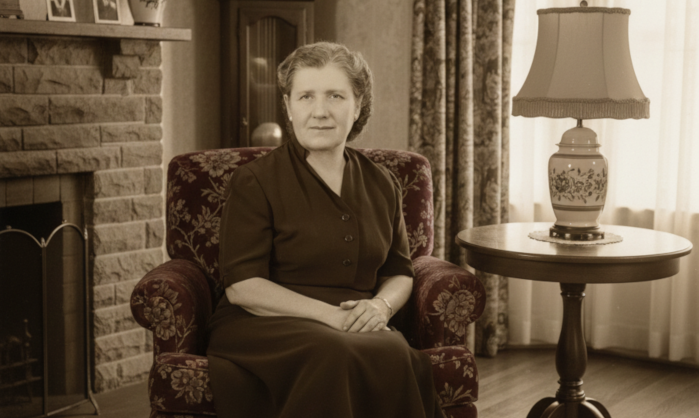
Garafira “Grace” Stratinar was born in what is called Romania today. Exactly which part of the country is not known although because her husband was from the Suceava area perhaps she was from there too.
Garafira’s life
Born
Garafira “Grace” Stratinar was born on January 14, 1888, probably in the Bukovina region of what is today Romania. While the exact place of her birth remains unconfirmed, familial ties suggest she may have hailed from the Suceava area of the Bukovina region, similar to her future husband Nicolai Cojocari. She was believed to be the eldest of five children born to parents listed in records as Stratinar and Martinak. She was believed to have two brothers and two sisters.
What’s in a name
The name Garafira might come from Glaphyra (or Glafira) which is a Greek feminine given name. It is derived from Greek ‘glaphyros’ meaning “hollowed” or “polished, elegant”. The Slavic and Italian names Glafira are derived from it.
According to the internet, the surname Strachinaru is of Romanian origin. It is derived from the Romanian word “străchină,” which refers to a shallow wooden bowl or dish, indicating an occupational surname related to pottery or woodworking. The name is relatively uncommon, but it can be found in various regions of Romania.
Move to Canada
Seeking a life beyond the borders of Romania, Garafira immigrated to Canada. Records suggest she arrived as early as 1906 at the age of 17 or in 1909 at the age of about 21, initially settling in Montreal, Quebec, amidst a small but growing Romanian immigrant community.
We do not know who she may have travelled with on her journey. We do not think that any of her siblings immigrated from Bukovina to North America at any point.
Marriage and the Move West
In Montreal, Garafira’s life became intertwined with Nicolai “Nick” Cojocari, a young immigrant who in 1907 had arrived initially in New York and then travelled to Montreal, Quebec, Canada. Their union, however, began with a dramatic twist. Family lore recounts that Nick was preparing to marry another woman in Montreal when Garafira, pregnant with their first child, intervened. The wedding to the other woman was called off, and Nick and Garafira were married in 1909.
Their first child, George, was born in Montreal on May 10, 1910. Shortly after his birth, the young family joined the great migration to the Canadian Prairies. They travelled by train to Regina, Saskatchewan, to join Nick’s brother John, who was working on the construction of the Saskatchewan Legislature.
Much had changed since the brothers had last seen either other with Nick’s marriage and both having new babies. John and Maranda had welcomed their first child, Wesley on January 1, 1910.
The Pioneer Years: Hardship and Resilience
In 1910, Nick and Garafira secured a homestead near Truax and later in the Kayville district. Their early life on the prairies was defined by extreme hardship. Their first home on the homestead was a “dugout”—a shelter carved into a hillside, half-house and half-hole, where they lived until a fire destroyed it around 1933.
Garafira established a reputation as a woman of immense physical and mental fortitude. It was said she was tough enough to give birth in the morning and be back working in the fields by the afternoon. She maintained a massive garden, spinning her own wool from the sheep they raised, and cooking for the threshing crews that Nick managed.
The Community Healer
Beyond her role as a farm wife, Garafira was a vital figure in the local Romanian community. She served as a midwife, delivering many children in the district.
She possessed deep knowledge of traditional medicine. She gathered herbs to create salves and medicines, often mixing these remedies with “special” instructions involving horsehair, phases of the moon, or burying items to strengthen the “magic.” Because of these talents, she was sometimes referred to as a “Witch”—a term often used in Romanian culture of the time to describe women with such specialized knowledge of healing and folklore.
Romanian witches, known in Romanian as “Vrajitoare”, practiced ancient folk magic blending paganism and Orthodox Christianity, offering fortune-telling, healing, and spellcasting for love, health, or curses. Often using rituals involving herbs, potions, and divinations like tarot, the witches often acted as spiritual life coaches for many Romanians.
A Large Family and Deep Losses
The Cojocari family was immense. Garafira gave birth to 18 children, though not all survived the harsh conditions of the early 20th century.
- Infant Mortality: She endured the heartbreak of losing children young. Her son Dimitri “Dan” died at age four in 1916 from mumps. In 1919, she gave birth to twins, Peter and Paul, who both died within a year.
- The Great Depression: During the drought and economic collapse of the 1930s, many of her adult children moved east to Windsor, Ontario, and Detroit, Michigan, seeking factory work.
- World War II: In a profound tragedy, her son Dan Cojocar (born 1924) was killed in action in France on August 8, 1944, while serving with the South Saskatchewan Regiment. A bay in northern Saskatchewan, Cojocar Bay, was named in his honor.
Faith remained central to their lives. They were pillars of the St. Peter and Paul Romanian Orthodox Church. Nick served as secretary and supervised the moving of the church building into Kayville in 1947. In the churchyard, they erected a monument to their fallen son, Dan.
Despite these losses, the family thrived. By 1934, after their first home burned down, they purchased better land north of Kayville. There, they built a grand, two-story house featuring Romanian-style scrollwork on the gables—a testament to their success.
Retirement and Legacy
In 1946, having seen their 14 surviving children grow into adulthood, Nick and Garafira retired from farming and moved into the village of Kayville. They became “snowbirds” of their era, spending winters in the warmer climates of Windsor and Detroit where many of their children lived.
Nick suffered a stroke in 1958 and passed away in October 1959. Garafira survived him by eight years. She passed away on September 25, 1967, at the Grey Nuns Hospital in Regina at the age of 79. She was buried beside her husband at the St. Peter and Paul Church Cemetery in Kayville.
Statistical Summary of Garafira’s Legacy (at the time of her death):
- Children: Survived by 14 children.
- Grandchildren: 28.
- Great-Grandchildren: 16.
- Marriage: She and Nicolai were married for 50 years.